By waynematthysse45@gmail.com / February 24, 2026
CHAPTER ONE
THE CROSSING
I like to think of myself as a practical person. But now and then, life has a way of exposing the gap between who we believe we are and how we actually behave when it counts. Honduras taught me that lesson the hard way — and it started before I even reached the village.
My arrival in Yocon was never supposed to happen the way it did. Paul, a Baptist missionary with a sun-weathered face and the unshakeable optimism that comes only from years of rural ministry, had volunteered to help me scout a location for a clinic. He said he knew of a place — remote, underserved, and exactly what I was looking for. He’d been there once before, on a mission trip, and assured me that the road was manageable. A few miles of dusty dirt track, he said. A crossing or two. Nothing to worry about.
Santiago, Paul’s son, joined us as our guide, and the three of us set off in Paul’s battered Toyota pickup, raising a trail of ochre dust behind us as the paved road gave way to gravel, and gravel gave way to something that could only generously be called a track. When we reached the river, I felt a flicker of unease. It was wider than I expected, and murkier, and the makeshift crossing — little more than packed earth and hope — looked like it hadn’t been dry in weeks.
“This doesn’t look very safe,” I said.
Paul glanced at the river, then back at me with a reassuring grin. “No problem. I’ll put it in four-wheel drive — just in case.”
We were halfway across when the front wheel found a hole. The truck lurched, tilted, and began to settle — slow and inevitable as a ship going under. Water crept in under the doors and started pooling around our boots. We piled out onto the muddy bank and watched in silence as the cab of the Toyota continued its quiet descent into the river.
Fortunately, we were not entirely without resources. A farmer was working a nearby field with a team of oxen, and after a brief and animated negotiation conducted entirely in Spanish, which I didn’t yet speak, he agreed to pull the truck to dry land. The engine sputtered back to life. Paul wiped water from the dashboard with a rag. Then he looked at me with the earnest hopefulness of a man who had not yet considered the possibility of defeat.
“Do you want to try again?” he asked.
“No, considering this crossing, I don’t think that this would be a safe place to bring a medical team. Let’s just go back home.”
What began as a debate about the wisdom of a second attempt quietly resolved itself, and a heavy discussion regarding baptism and original sin reignited as we made the journey back. We had debated these issues before, and although neither of us ever changed our views, it was a good way to pass the time. Unbeknownst to us, however, we not only passed the time, but we also passed the turnoff that would take us home.
“Are you sure we are on the same road?” I asked after what seemed a longer period of time than when we came. “I don’t remember all of these curves.”
“Hmmm, you’re right,” Paul responded. “I wonder where this road is taking us? We can stop at the next village to find out where we are.”
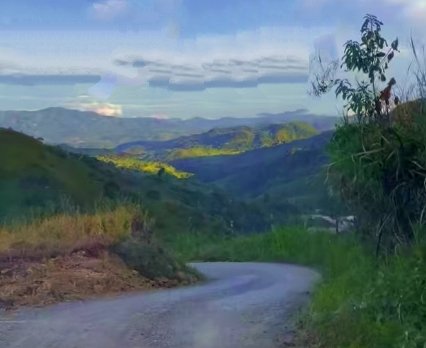
The road carried us forward, winding up through hills thick with jungle until the ridge broke open and the valley appeared below us — sudden, green, and vast, and there, on the floor of the canyon, a small village sat with a river running through it.
“That’s it!” I exclaimed, unable to contain myself.
We drove down into the valley and stopped for a cold Coke at a small tienda where Paul, in fluid Spanish, asked around and learned what he could about the village. He brought back the news in two parts, the way people do when they already know which half you won’t like.
“Good or bad news first?’ He asked as we got back on the road to home.
“Good,” I responded, looking back at the village in the valley.
“Well, they would love to have a clinic here. The closest hospital is 4 hours away, and they mostly rely on a “medicine man” and his magic potions when sick. There have been no Western people in the area for nearly two years, and they were Peace Corps workers, but they didn’t last very long.”
“That sounds positive,” I responded enthusiastically, “ What’s the bad news?”
“The two Peace Corps workers had been killed — caught in a brawl between rival political parties. Plus, gangs and remnants of the Contra soldiers still drifted through this part of Olancho like bad weather. My advice is for you to look for a place closer to civilization.”
I agreed with him in words, but in my mind, I already knew this was where I was going to end up. A few weeks later, Santiago, whom I had hired as my driver and translator, with his wife and children, and I, an ignorant Gringo who didn’t know a word of Spanish, arrived in the small village of Yocon, Olancho, to begin a 12-year experience that would change my life forever.
CHAPTER TWO
THE GIN POLE
Things were going well in that first year. Not knowing Spanish made it difficult to run the clinic, but the Honduran people use their hands as well as their mouths when speaking, and so it was easy to recognize medical conditions in most of the cases. Santiago was around for the difficult ones, and the village children were picking up English much faster than I was learning Spanish. My training as a psychiatric nurse, a Navy hospital corpsman, and a Marine field medical technician gave me the basic knowledge I needed to run the clinic, and my combat experience in Vietnam gave me the confidence I needed when faced with emergency cases such as amputations and large cuts from machete wounds or gunshots. WHERE THERE IS NO DOCTOR was my go-to consultant for medical conditions I did not even know existed. FAITH (not mine but theirs) also played a big role in my successful impersonation of a general practitioner.
It is hard not to look down when people put you on a pedestal. The villagers had knowledge far greater than mine in many areas. They did things by hand that I didn’t think were possible. Things I would not even know how to begin. One of those times was when it was decided we should dig a water well at the new clinic, a man with a wishbone-looking stick was called from a neighboring village, and he walked around the property until the stick suddenly pointed down. “Aqui,” he said confidently, and the digging began.
The hole was just big enough for one man to stand in, and by the first day, he was in over his head. By the fourth day, he was so far down we needed a flashlight to see him, and on the fifth day, I heard him shout up, “Agua!” I looked down and saw the tiny man at the bottom of the well with the sides of the hole caving in around him. I was relieved to see him finally being pulled up and out of the well and to have that risky part of the project finished… but it was short-lived. Nothing could have prepared me for what would happen next.
While the man who dug the hole took a break, the other men began rolling several cement tubes closer to the well. “How are they going to get those heavy tubes in the hole?” I inquired of Santiago.
“With a rope.” He responded.
“But who is strong enough to hold the rope?”
“Well, you are the biggest man here.” He said, jokingly, I assumed.
I watched as they tied a long rope around the tube and then fed the line through a pulley on top of a large bamboo pole. They wrapped the rope around the pole several times and handed me the end, as they lowered the man back into the well.I panicked when they moved the first cement tube over the hole because I was the only one holding the rope.
‘WAIT, WAIT!” I shouted as I grabbed the rope tightly, but to my surprise, there was no tension on the rope. The tube swung gently in the breeze above the hole.
Everyone was laughing at my panicked outburst, including Santiago. “Just release the rope slowly,” he instructed.
I did as he said, and the tube and several others went into the well with almost no effort.
There were many more lessons to be learned, and at times I felt more like a dunce than a teacher.
CHAPTER THREE
THE HEADLESS HORSEMAN
There were many things I didn’t understand about life in rural Honduras. That I survived at all had nothing to do with any intelligent decisions I made — in fact, it was most likely my ignorance that made people feel sorry for me and want to protect me.
Yocon was a dangerous place to live. Most of the men, some of the older boys, and even a few women wore holstered guns, and everyone had access to a machete — most kept sharp enough to shave with. I had never sutured anyone before arriving in Honduras, but I realized within my first week that I needed to learn fast, because machete wounds would become my specialty. I treated everything from amputated fingers on children cleaning sugar cane to amputated hands on men caught stealing. The most memorable — and painful — case was a man gored by a bull who required twenty-seven sutures in his scrotum.
Tropical infections were the second most common complaint. That part of the world is also home to the human botfly, which attaches its eggs to biting insects. When the larvae hatch, they burrow into the skin through the bite wound, eventually forming a large, maggot-filled boil.
I didn’t treat many bullet wounds, primarily because most of the men who carried guns knew how to use them and rarely missed. One exception was a man who came to me wanting three bullets removed from various parts of his body. He had been shot seven times through an open bedroom window while he slept — an attack that had occurred before I arrived in the village, and one of the reasons everyone secured their wooden shutters every night. I removed all three accessible bullets, but hesitated on the last one. It sat dangerously close to the coccyx, and no other doctor had been willing to touch it. I told him plainly that I wasn’t really a doctor and had no experience with something like this, but he insisted — regardless of the outcome — because he couldn’t ride in the saddle with it still in.
I never understood the rule about closing the windows at night. Without electricity, the nights were often brutally hot, and shutting the shutters cut off what little airflow there was. No matter how much I complained, the others in the house held firm. When I pointed out that I had no enemies who might want to shoot me, they told me that wasn’t the only reason.
“What’s that?” I asked.
“The headless horseman!” they said in unison.
“Headless horseman? There is no such thing.”
“Yes, there is,” one of the boys replied. “Sometimes he comes to the village at night and stands by the window. We have all heard him.”
“So you heard a horse outside your window and assumed the rider had no head? Has anyone ever opened the window to check?”
“NO! Because if we did, he would cut ours off.”
“That’s a story for small children,” I said. “You’re grown people.”
I went back to fanning myself with a notebook and settled into living inside their reality.
Yocon was peaceful most of the time. With no electricity, the village quieted the moment darkness fell. The nights filled up with the sounds of nocturnal animals, and if you lay still and closed your eyes, you could sometimes hear water moving over rocks in the river where the women washed clothes during the day.
It was on one of those nights that the sound of a horse came galloping into the village. Late riding wasn’t common, but I didn’t give it much thought — until one of the boys whispered, “He’s here.”
“Who’s here?” I whispered back, not sure why I was keeping my voice down.
“The headless horseman. Be quiet so he doesn’t hear us.”
“Not this again,” I said. “I told you, there is no such thing.”
“Shhh. Listen.”
Everyone sat up in their beds. I stayed quiet and watched with mild amusement as they stared at the window. We could hear the horse coming closer — clip-clop, clip-clop — and then silence, as it stood at the window of our neighbors. Eventually, it stopped just outside our window. Its breathing was heavy as it snorted and pushed its nose against the window.
I almost laughed out loud when one of the younger boys screamed, but I managed to hold it in because for them, the demon outside was very real. “There’s no one out there, guys. It’s just a horse. There’s nothing to be afraid of. There are no headless horsemen.”
I got out of my bed and started for the window, intending to open it to prove my point; however, as I reached for the latch, the horse snorted again, as if knowing I was there, and I foolishly jumped back into my bed.
There was laughter in the room, and, as if knowing it had made a fool of me, the horse, and possibly its rider, moved on to the next window.
CHAPTER FOUR
THE BOY WHO FELL FROM HEAVEN
Honduras is a Catholic nation, although it has many Christian missions as well. Most Hondurans are born Catholic and prefer to die Catholic; however, in between, they may take advantage of the Christian missionaries who make their money from converts by giving away free items in exchange for attendance. The priests, however, tend to be more miserly with funds, and many expect rewards for their services.
When I first moved to Yocon, I noticed the Catholic chapel in the middle of town. It was not in very good shape and was definitely in need of paint. I had come to Honduras with a Baptist missionary, and although I had known Catholics before coming, my upbringing still formed a cloud around my thinking, and I viewed them as idol worshipers. I asked them why they didn’t get the money from the priest for the paint, and they told me that he said it was their responsibility. So, like a good Christian, I helped them out, hoping my efforts would pay off in eventual converts and maybe some extra cash from a newsletter article.
The old Catholic priest assigned to that area didn’t come around very much, except to collect the monthly dues. Once in a while, he made an appearance on a Sunday morning, and when he did, everyone knew it because he would blow his trumpet very loudly to announce his arrival. The first time I heard it, I thought the Rapture was happening because it sounded so out of place. He didn’t like that Baptist missionaries had invaded his territory, and told the people to take everything they could get from me, but not to listen to a word I said.
At one point, he surprised me by showing up at my clinic — alone. He had run out of his heart medicine and was wondering if I had anything I could give him until he could get back to the city.
“With or without a sermon?” I said jokingly, as I handed him a box of something similar to the medicine he had shown me.
He had a puzzled look on his face at first, but then smiled as he realized someone had told me about his instructions. We shook hands, and I thought, at the time, that it could be the start of a new relationship. However, a few weeks later, he drowned while trying to cross a river during a downpour. Supposedly, his jeep got stuck, and when he got out to engage the four-wheel drive, a log struck him in the head, causing him to lose his balance in the rising current of the river.
Living in a small, remote village is much like living in a dormitory. There are no secrets. It was difficult at first, but eventually I became less aware of our differences and more aware of our similarities. I realized that those I once thought of as idol worshipers — because they prayed to a statue — were no different than me, who prayed every night believing that my prayers could somehow penetrate the ceiling of my room and reach the ears of an old man who lived somewhere up in the stars. That awareness allowed me to look more seriously at spirituality, both mine and theirs.
I have always been a big believer in miracles, and that fits in nicely with the Catholic culture. The only problem with that is that people who believe in miracles tend to be susceptible to con artists and magicians.
When I first arrived in Honduras, I was taken to see the Virgin of Suyapa, the patron saint of Honduras. At the time she was kept in a small temple, but they were building her a new temple right next door. There was a problem, however: the new temple was years in the making and had gone way over the original budget. Pleas for more money had gone out, but people were tired of giving and giving. It was estimated that $1,000,000.00 was needed to finish the job.
A few weeks into my stay in Honduras, the Virgin figurine was supposedly stolen from the temple, and a massive search was undertaken. Literally every car in Honduras, including ours, was searched until she was finally found in the men’s bathroom of a gas station. There was much jubilation throughout the country; however, the bad news was that she had been violated, and her diamond-studded dress was missing. To restore her and have a replica dress made was estimated to cost $1,000,000.00. The money was raised in just a few days, the small figurine was returned to her chapel, work on the new temple was completed, and no one, to my knowledge, ever questioned the validity of the incident.
On another occasion, the newly assigned Catholic priest came into our village, announcing that there would soon be several days of complete darkness in the world. Flashlights and even candles would not work during that time; however, candles blessed with holy water were the only ones that would work, and every household needed to have them or risk evil spirits entering their homes. I was one of the few households in the community that refused to buy the candles. The darkness never came, but to my knowledge, no one ever asked for their money back.
Just outside of Yocon lived a very devout woman who had a statue of a small boy saint on the mantel of her fireplace. She had prayed to it for many years, and over time the paint began to fade, and parts of it were damaged by children touching it, or on the few occasions when it was knocked to the floor by accident. She would, at times, announce a special celebration for her saint, and people from the village would respectfully come to pay homage to it. Usually, they would leave some money at the altar, but over the years, the donations grew less and less because of its worn appearance.
One day, she came running into the village, all excited, and told everyone that God had taken the saint back into Heaven. She had seen it with her own eyes ascending into the sky when she returned from her afternoon walk. Everyone went running to her house to see if she was really telling the truth. When they got there, they found the statue missing from the altar and therefore assumed that a miracle had indeed occurred.
A few weeks later, she came running into town again, but this time she said that God had sent her a new saint. She saw it descending from Heaven when she returned from her walk, and she had to run to catch it before it hit the ground. All of the villagers went running back to her house to see if it was true. Sure enough, there it was: a brand new, brightly colored statue of another little boy. Everyone crossed themselves and offered prayers, dropping their money on the altar as they left the house. Even the boys who lived with me were excited about this miracle and couldn’t stop talking about it all afternoon.
That night at the dinner table, I asked them what they really thought of the incident, and all of them were still very convinced that it was real. So I asked them this question: “If the statue really came down from Heaven… why would there be a MADE IN GUATEMALA seal stamped on the base of it?” Needless to say, it ended the conversation and perhaps shook their faith in miracles. But because of this incident, they were forced, from that day onward, to start looking at things more critically.
They say ignorance is bliss, and perhaps that is so, but often the ignorant are misled by men or women with selfish motives. I am convinced that miracles do still happen, but I suggest looking for the MADE IN sticker before you put your trust in one.