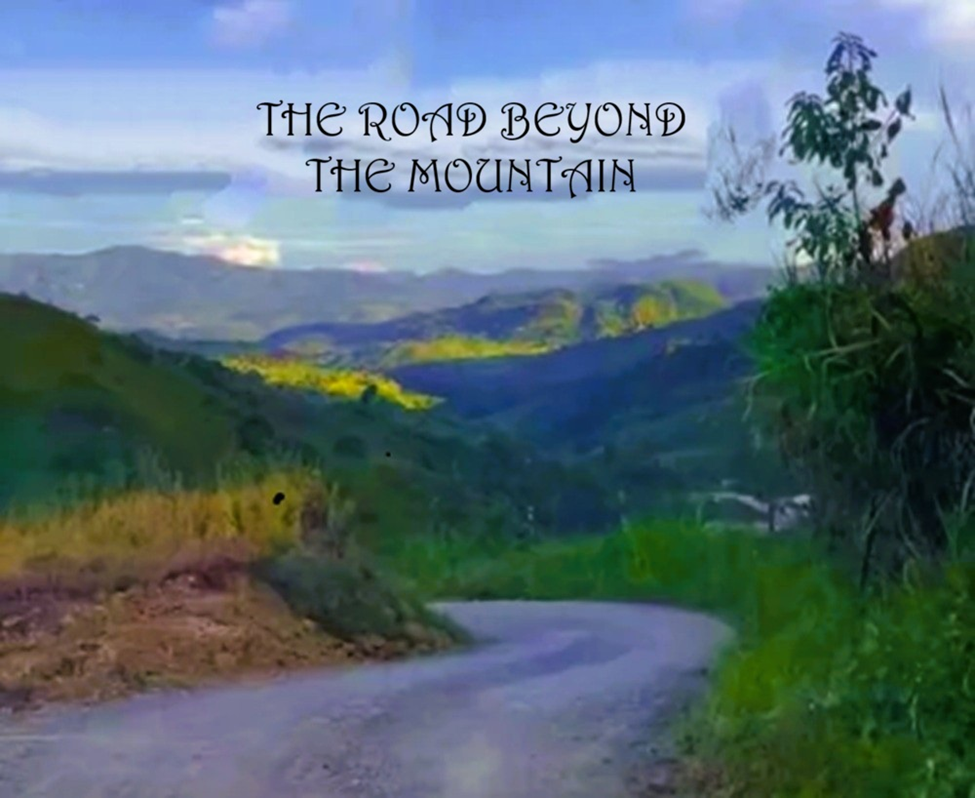
MY ARRIVAL
“Next.”
The word cracked through the terminal like a rifle shot. My head throbbed, thoughts spinning in a loop: Go or stay? Stay or go? The guard’s voice rose again, sharper this time, pulling me toward a decision I wasn’t ready to make.
.***
I was rather naive when I first arrived in Honduras. Looking back, perhaps it was my naivety that saved me. I didn’t know much about the country when the invitation came; in fact, I didn’t even know where it was. I had to look it up in the Encyclopedia. All I knew was that it was an opportunity to get out of the United States and breathe some different air. I was on the run — not from anything illegal, but from a life that had become meaningless.
It would be easy to blame Vietnam, or any one of the many other traumatic experiences I had gone through in the twelve years that followed. It was more than PTSD. It was the realization that I no longer fit into American society.
I had sent my resume to several organizations outside the United States, but a lack of formal education and foreign-language skills automatically disqualified me. Then a call from a Baptist minister in Mississippi changed everything. He was organizing a medical mission trip to Honduras, but the doctor scheduled to distribute medicine had backed out at the last minute. If he couldn’t find someone with medical training to replace him within two weeks, the trip would be canceled. I mentioned I was only a nurse, not a doctor, but he assured me it wouldn’t be a problem because the team would visit an orphanage in the mountains. The only requirements were a passport and $500 for airfare and expenses for the six-day trip. I accepted immediately, without a second thought.
The day after receiving the call, I went to the post office to apply for a passport. I didn’t want to take any chances, so I paid the extra money for fast service. That cut into my available cash, and I wasn’t sure how I would raise the rest of the money. I had already sold almost everything I owned to pay off a credit card debt, and although I still had my Chevy van, something I swore I would never sell, I still owed $800 on it. Reluctantly, I put a “FOR SALE” sign on it and parked it in the front yard. By the afternoon, it was sold for $ 1,200.00, leaving me $100 short of what I needed. A visit to my uncle Rich, who was suffering from ALS, provided the rest. When I told him about my plans, he handed me $250 without hesitation.
My parents drove me to Mississippi at the agreed-upon time and left me in the care of the Baptist preacher and his wife, a couple who lived in entirely separate worlds but could put on a good show for their friends and congregants. Over the next twelve years, our lives would drift along like three independent balloons on separate strings: almost all the time together, but never touching.
On my first day with the Pastor in Tegucigalpa, before the group arrived, I learned a lot. Like many pastors I had met before, he seemed different when he was away from his followers and supporters. This worried me, but he explained that his main goal in Honduras was to find a village where a group of doctors could establish a permanent clinic. These doctors were funding his efforts, which gave me hope, knowing others were involved.
The remaining group members arrived at Toncontín Airport the next morning. The mountain orphanage director had arranged for the local village bus to pick us up. Although the bus was crowded, it was clear that the front seats were reserved for us. The journey took five hours, with only a 20-minute rest stop. During the trip, there was no interaction between the villagers and us.
I was disappointed with the bus ride, and my disappointment grew upon arriving at the orphanage, as it seemed they had made little preparation for our arrival. The mission director and his wife apologized for the condition of the rooms, explaining they had just returned from a six-month furlough and hadn’t had time to clean the house. The Pastor and the mission director excused themselves to the mission office while our team tidied the house. Afterward, we met the 20 orphans, who were housed in poorly constructed wooden and metal structures behind the parsonage. They were not allowed inside the director’s home, and we were told that all interactions had to happen in their living area. I wanted to get to know them, but the language barrier made this difficult. The director provided few opportunities for communication outside his presence.
There was one child who was physically disabled — their “mascot” for fundraising purposes, as I came to understand it. The story was that he needed surgery in the United States, and donors were being asked to give toward it. I seriously doubted, however, that anyone ever intended to follow through with the surgery, regardless of how much money was raised.
I managed to go out several times with James, the young translator hired by the Pastor. Though an American citizen, his upbringing in Honduras due to his father’s missionary work gave him a local perspective. We visited several families in the nearby community, and I treated some severely malnourished children along with others requiring medical care beyond what our limited supplies could provide. As this happened, I started to question the true purpose of organizing this trip. The orphanage, too, felt less like a refuge and more like a stage set for donors. I had come searching for purpose, but already I sensed that survival here would mean learning to see through masks.
Although I feel we didn’t accomplish much during our time there, I had a very positive impression of the children and villagers. Soon enough, it was time to leave, and while waiting outside for the bus, we heard it approaching from downtown. The music was loud, and the passengers were singing along. All the front seats were taken, but the mission director boarded the bus and briefly talked with the driver. I saw money exchange hands. Shortly after, the driver told the first three rows of passengers to move to the back. As they hesitantly obeyed, I realized why the passengers on the way up had been so quiet and distant.
I was the last one to board the bus, and as I made my way down the aisle, I glanced toward the back and could almost feel the hostility radiating from the displaced passengers. Then I noticed something: near the very back, an older woman was sitting alone with a cage of chickens at her feet. Something about her stillness amid all the commotion made me keep walking. Instead of taking my reserved seat at the front, I went all the way back and inquired, as best I could without a shared language, if I could sit with her. She seemed unbothered by the idea, so I settled in beside her as the bus lurched forward and the music started up again.
It didn’t play for long. The director stood up, leaned over to the driver, and handed him more cash. The music stopped abruptly, and for the next five hours, the bus rode in near silence — broken only by the voices of the mission team near the front, who talked freely among themselves in English, sharing their impressions of the country and its people with the easy candor of those who assume no one else can understand them. Some of what they said was less than generous, and I was ashamed to be associated with them.
I sat in the back with the older woman and her chickens, saying nothing. But my mind was anything but quiet. I had come to Honduras as part of a team, slotting neatly into a role someone else had written for me. Now, watching the countryside roll past the window, I understood I no longer wanted to play a role. I dreaded returning to the life I had left behind, yet with no money, no plan, and nowhere to sleep, I had no other choice. My head was still spinning when the bus pulled up in front of the airport departure gate. We said our goodbyes to the mission director and to James, and I took my place in the customs line, bag in hand, doing my best to look like a man who knew where he was going.
***
“Next!”
“Again, the question circled: stay or go. But this time, I heard my own answer—spoken aloud before I could stop myself: “James! Could I stay at your place for a few days?”
“Si, no problem, but you would have to sleep on the floor.”
“Great!” I shouted as I grabbed my bag and walked back through the terminal doors, away from the line, the flight, and everything I had been heading toward. The group stood watching me go, too astonished to say much of anything. I gave them a wave and kept walking.
I arrived in Honduras with $93.00 in spending money for the six-day excursion. I ended up staying for 12 years.