While sorting through old boxes of memorabilia, I found myself surrounded by forgotten pieces of a life I once lived. Old letters, photographs, report cards, and names I had not spoken in decades quietly reopened doors I thought had long since been sealed. As I revisited those fragments of the past, I began to understand something important: the people we become are often shaped as much by forgotten experiences as by the ones we remember clearly.
One memory led me back to Bluebird Street and a boy named Eddie.
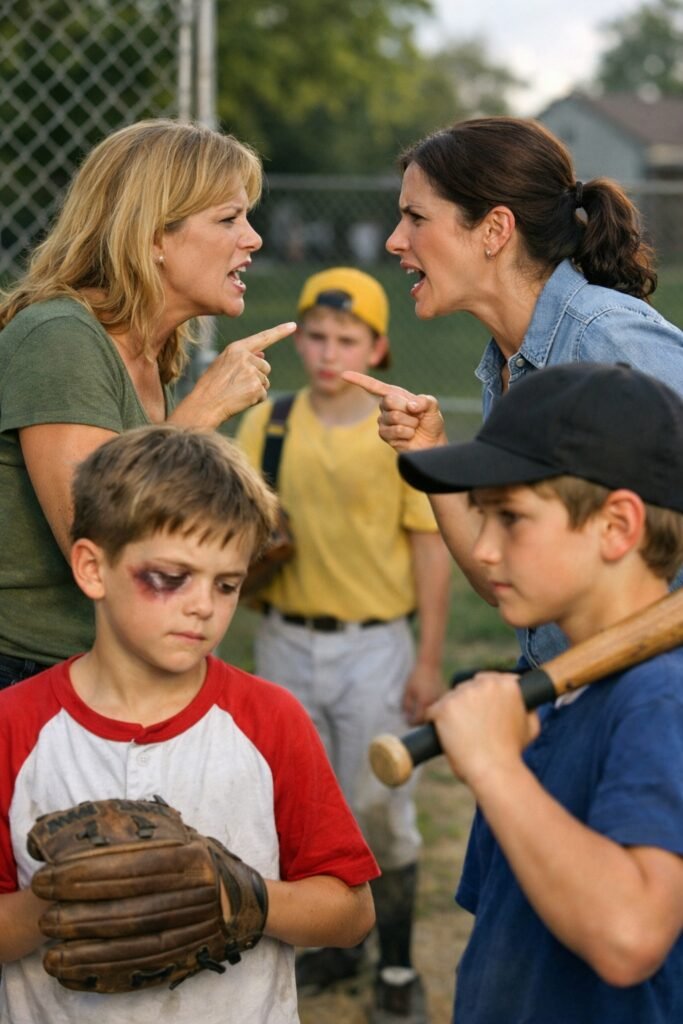
Eddie was younger than I was, but we spent many afternoons together as neighborhood friends. Then one day, a softball game ended badly. An accident resulted in an injury, tempers flared, parents became involved, and words were spoken that could not be unsaid.
Looking back, the incident itself was relatively minor. Yet the consequences lasted for years. Our mothers never reconciled, and neither did we. A childhood friendship disappeared almost overnight.
What strikes me now is not what happened that day, but what happened afterward.
For years, whenever I thought of Eddie, that final unpleasant encounter colored my memories. I never questioned whether the image I had of him was fair or complete. Our disagreement became the lens through which I remembered him.
Today, I wish I could find him. Not because either of us was entirely right or wrong, but because life has taught me that understanding is often far more important than being right.
That reflection led me to a larger realization.
Many of our prejudices, assumptions, and resentments don’t start with hatred. More often, they stem from misunderstanding. Sometimes, those misunderstandings become family stories—stories that grow and spread through neighborhoods and even cultures. Eventually, they become histories people inherit without ever examining where they began. We may dislike someone without truly knowing why.
History offers many examples of conflicts that began as personal grievances and widened into generational divisions. One of the most enduring appears in the shared traditions of Judaism, Christianity, and Islam. All three trace their roots to Abraham’s family and the story of Isaac and Ishmael. Whatever theological interpretations one embraces, the underlying narrative reflects a familiar human theme: family conflict, separation, competing identities, and generations growing up on opposite sides of an ancient divide.
Over time, the original participants disappear, yet the division remains. The reasons become complicated, and emotions are inherited. Eventually, people remember the grievance more clearly than its source. That pattern is not confined to the Middle East or to ancient history. We see it in politics, in race relations, and in economic divisions.
We see it in neighborhoods, schools, churches, and families, and today we see it here in Michigan.
Too often, we define one another by a single moment, disagreement, label, or story. We divide ourselves into opposing camps and convince ourselves that the distance between us is greater than it really is. Most people are far more complex than the categories we place them in.
The older I get, the more I believe reconciliation begins with curiosity about where our assumptions come from. Why do I believe what I believe about this person, this group, or this community? Is my judgment rooted in experience, understanding, and truth—or in a story I inherited long ago?
Those questions require humility and courage. However, it is easier to preserve a grievance than to examine it, to blame than to understand, and to remain divided than to risk reconciliation. Yet every attempt to understand creates the possibility of healing.
Perhaps that is the lesson hidden in my old box of memories: a boy named Eddie, a childhood friendship lost over a game no one remembers, and an argument buried by time. Decades later, the memory still whispers an enduring truth: the conflicts that shape our world often begin much closer to home than we imagine.
If humanity is ever to overcome its deepest divisions, we may need to begin where reconciliation has always started: one person at a time. By tracing our misunderstandings to their source, recognizing our shared humanity, and choosing understanding over blame, we can keep today’s grievances from becoming tomorrow’s inherited resentments.
The future doesn’t change because someone wins every argument. It changes when enough people choose to understand one another rather than defeat each other. One can’t help wondering how different history might have been if understanding had replaced resentment from the very beginning.


