Memorial Day 2026
Remembering the Eleven
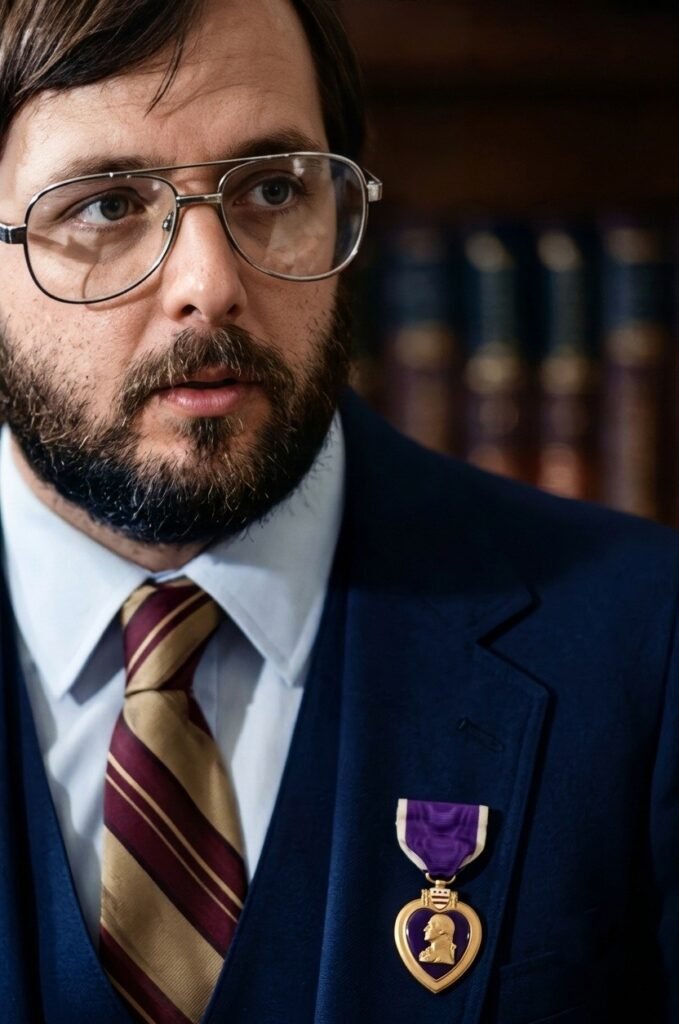
In 1984, Congressman Henry B. Gonzales awarded me the Purple Heart in San Antonio, Texas. I had not received it in 1968, when I was wounded during Operation Mallard Duck—a mission that was never meant to be survived. I was the last to leave the field alive. The medevac helicopter that carried me out was shot down, yet I somehow lived. Eleven Marines died to put me on that aircraft. I accepted the medal not for myself, but for them. I wear it proudly in their honor.
Back then, we were patriotic Christian Americans who stood for the National Anthem at nearly every public event. Many of us volunteered to fight in Vietnam against communism, and families sent their loved ones willingly. Yet beneath the surface, something was changing. The suicide mission was my first sign that all was not right. Assassinations at home, unexplained violence, and growing disillusionment revealed a deeper sickness. Veterans like me began to see it clearly.
No Heroes
“Mallard Duck? Hell—we’re sitting ducks!” our sergeant swore, slamming down the radio. His voice broke as he pleaded: “Promise me—if any of you survive, tell the story of what happened here today.”
There were no heroes in Alpha Company. No “Rambo” to lead us, no glory to chase. Most of us were replacements, new to Vietnam, still raw from the Tet Offensive. I was a Navy corpsman assigned to the 7th Marines, dropped into a company already fractured by racial tension and mistrust.
I learned quickly that survival often depended less on orders than on the men beside you. Patrols were faked, firefights staged, and resentment toward officers ran deep. Yet bonds formed across racial lines, and I began to feel accepted. Still, I had not yet faced combat. That moment would come soon enough.
Hill 55 and Operation Allen Brook
Life at Hill 55 offered brief respite—warm showers, decent food, even evening entertainment. But the war was never far. Skirmishes at the perimeter reminded us of the cost. Then came Operation Allen Brook, a march through breathtaking jungles toward the Ho Chi Minh Trail. Exhaustion set in, but our captain dismissed complaints as weakness. When the mission was abruptly canceled, we trudged back under impossible orders, driven more by fear of abandonment than by duty.
Operation Mallard Duck
The next mission was different. Mallard Duck was designed as a decoy operation: make contact, draw fire, and let bombers finish the job. But what we encountered was devastation. Villages were destroyed, wells poisoned, civilians wounded, and ignored. I watched a boy being dragged behind trees, never to return. A woman spat in my face—not out of hatred, but because to her, I was the enemy. My conscience fractured in that moment.
The ambush that followed was relentless. We were bombed by our own artillery, surrounded by hidden mortars, and cut down by machine‑gun fire. By nightfall, Alpha Company had been reduced from 160 men to barely a dozen. The staff sergeant tried to encourage us: “All we have to do is make it through the night.” But dawn brought only more orders, more impossible charges, and more death.
When I was wounded rescuing a corporal, the sergeant ordered me onto a medevac. As the helicopter lifted, enemy fire riddled its hull. Flames filled the cockpit. The last thing I heard was: “Brace yourselves—we’re going down!”
I survived the crash. The men who stayed behind did not. Eleven Marines died that day to save me.
It has taken me years to fulfill my sergeant’s last request—to tell the story. History suggests he was right: companies like ours may have been sacrificed to generate support for the war. If so, the opposite occurred. Their deaths fueled disillusionment, but they did not die in vain.
I share this now so that Alpha Company, ordinary men who gave everything, are not forgotten. With each passing day, I understand more deeply the sacrifices they made—not only their lives, but their relationships, their joy, even their sorrow.
The Enemy
The sun settled slowly
After a long and costly fight,
And I, with the rest of the men who remained,
Pulled back and dug in for the night.
In front of us in an open field,
Lay those we could not save,
Their mangled bodies stiff and cold,
Their life for freedom gave.
I sat alone on listening post,
But nothing could I see,
Yet across the field at another post,
I knew one sat like me.
I wondered if by chance he too,
Was trying not to cry,
Remembering all the friends he’d lost,
Asking why they had to die.
Then suddenly my feelings changed,
No hatred could I find,
How strange that this, my enemy,
Could have feelings just like mine.
I wanted then to meet him,
But would he understand,
If I stood in peace before him,
And offered him my hand?
Just then, I heard a shot ring out,
And I knew it could never be,
For the young man across the field,
He was my enemy.
And so I put away my thoughts,
And forgot about my friend,
For in the morning, we’d probably meet,
And for one, it would be the end.
This simple poem, written during recovery, captures the paradox of war: that even across battle lines, the enemy may share the same grief, the same humanity.
Memorial Day for me is not about medals or recognition. It is about remembering the eleven Marines who gave their lives so I could live. Their courage, their sacrifice, and their humanity remain with me always.
Authors Note
This is a redacted version of No Heroes. The full version can be found in the book Letting Go, available on Amazon.