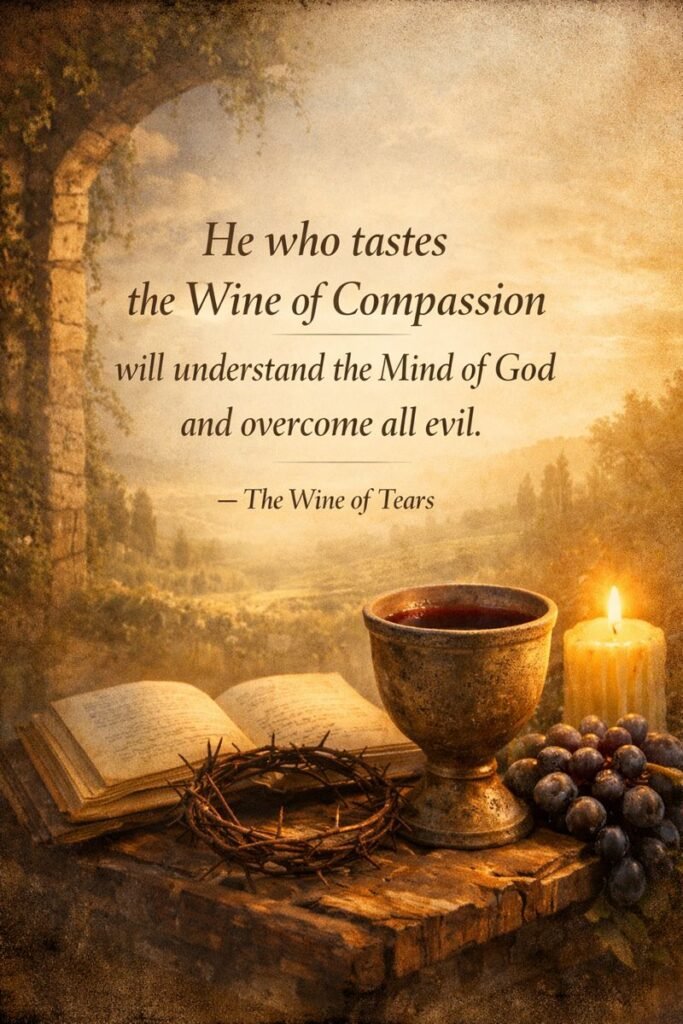
“There is a Wine that flows from the vineyards of the Lord,
Its sweetness aged in jars of clay, its price none can afford.
And wise men say that he who tastes its sweetness on his tongue
Will understand the Mind of God and evil overcome.”
With tear-filled eyes, a dying father passed these words on to his son… then peacefully closed his eyes and surrendered his spirit.
His wife had died giving birth, and so he raised his son alone. He had been a good father and a generous man; yet because of a physical handicap, he had lived a difficult life and was never able to give his son all the things he had hoped to.
Years went by, and the son tried to make his mark on the world. But every time he advanced himself to a position of status, his father’s words would return to him… and he would remember how his father had struggled in a world that would not accept him as a whole being.
It was not a quick decision—more of a gentle pulling—that caused him to leave society and begin his journey in search of the Wine his father had spoken of. He believed that if he could only find this Wine, he could use the knowledge it bestowed to heal the wounds of the world and make it a better place for all of mankind.
His travels took him near and far, to places unknown to most. From the finest crystal, he sipped the wines of kings and rulers, yet none could give him the knowledge he sought. And when at last, his fortune spent, he returned from whence he came and sipped the wine of paupers, still he gained no wisdom that could help him change the cruelty he saw.
He spent his final years caring for abandoned and orphaned children in the house where he had been born. And when at last he could journey no further, he prepared himself to die. Tears filled his eyes as he remembered his father and the hardships he had endured. He had hoped that in his lifetime he could repay his father’s love by finding the Wine he had spoken of—but now his own journey was over… and he had failed.
As the children gathered around his bed, he gazed into their tear-filled eyes and realized he had failed them as well, for he had nothing left to give, and they would once again be alone. Tears of compassion rolled down his frail, bony cheeks and fell upon his dry, cracked lips. With a parched tongue, he licked them away—and in doing so felt his body relax. A peacefulness he had never known flowed through his entire being… for he realized that his tears had lost their brine, and at last, he could taste the Wine.
“There is a Wine that flows from the vineyards of the Lord,
Its sweetness aged in jars of clay, its price none can afford.
And wise men say that he who tastes its sweetness on his tongue
Will understand the Mind of God and evil overcome.”
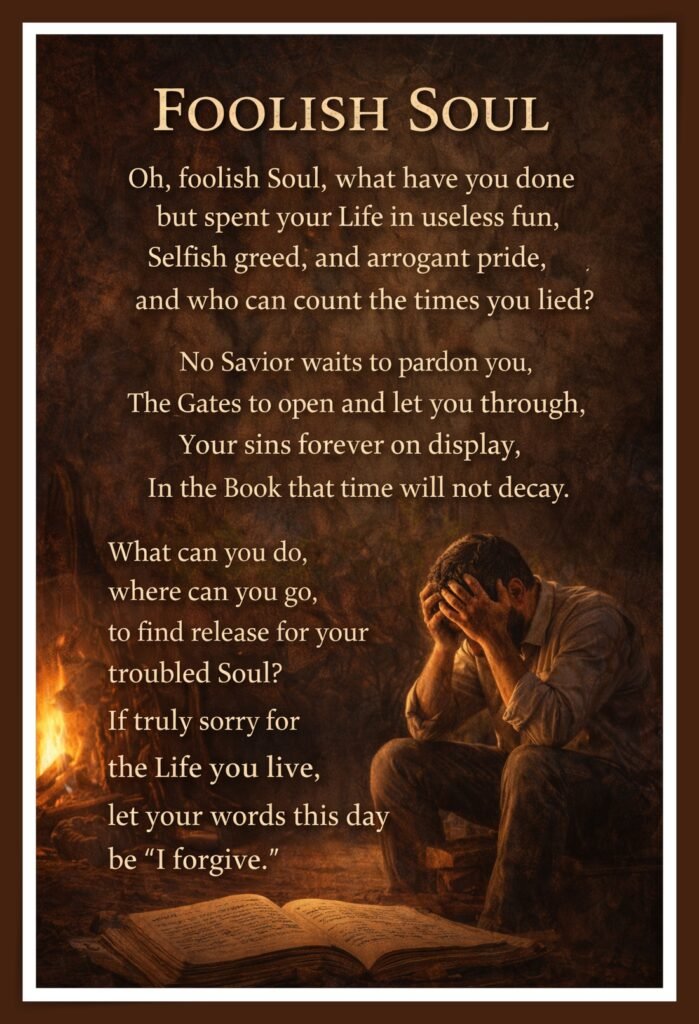
As a species, we have repeatedly acted on inherited prejudices, convincing ourselves that certain groups are somehow less human, less deserving of dignity—or even of life itself. In doing so, we have committed atrocities while telling ourselves they were necessary, justified, or deserved.
The dehumanization that precedes genocide, the racial hatred that fuels violence, the tribal thinking that renders others expendable—none of this begins with the act itself. It begins with the language we use, the stories we tell ourselves, and the prejudices we pass down to our children like poisoned heirlooms.
Perhaps most tragically, the weight of our collective and individual sins can crush us. We are consumed either by the guilt of our past actions or by a stubborn refusal to acknowledge that guilt at all. In both cases, we lose our way.
The path forward—for individuals and for humanity—lies not in denial or self-destruction, but in the courage to face our failures honestly, to make amends where possible, and to ensure that the hatreds and prejudices that led to these tragedies are not carried into the next generation. The difference between wisdom and ruin often lies not in the mistakes we make, but in how we choose to carry them. Healing cannot begin until one has acknowledged one’s misdeeds—and learned, at last, to forgive oneself.
The questions came early. They first surfaced in Mr. Timmer’s Sunday School class at Olivet Reformed Church in Grandville. I didn’t intend to embarrass him by asking what he could not answer, but at that age, there was no one else to ask. I was already searching.
In those early years, I imagined that becoming a minister might lead me to the answers I was looking for—that somewhere in a seminary, truth would finally reveal itself. But history intervened. By the time I graduated from high school, the war in Vietnam had taken center stage, and I knew I had to go.
Four years in the military taught me more about life than I could ever have learned in a Christian college. When I later tried to become a lay missionary, I was undone by what I found instead: hypocrisy, bigotry, and corruption. Slowly, almost reluctantly, I turned away from organized religion altogether.
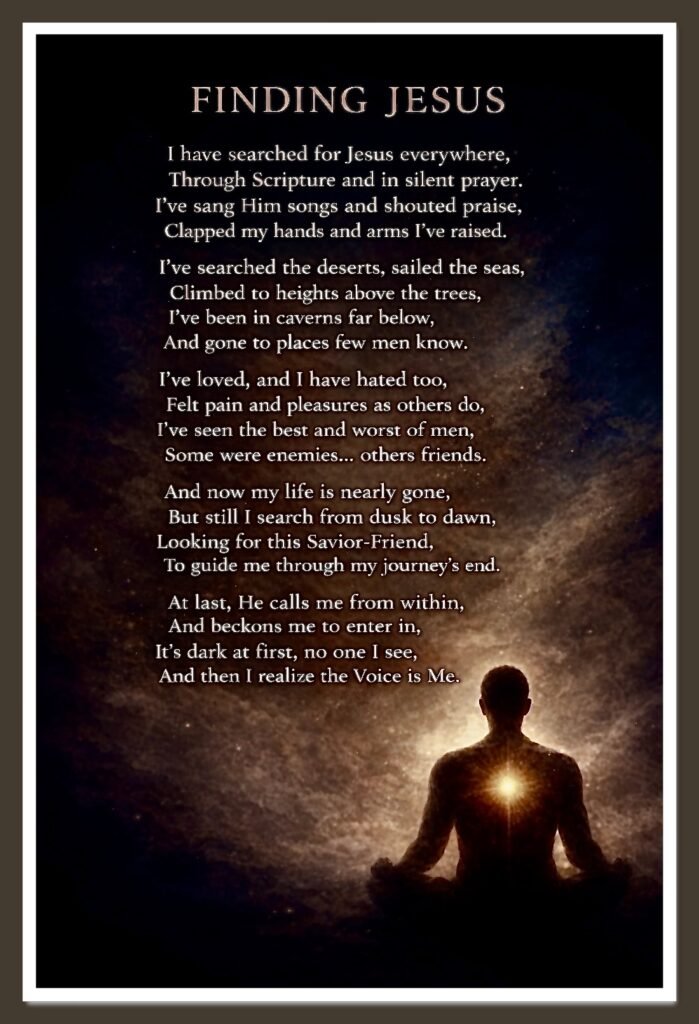
It was much later—while working in an AIDS hospice in Cambodia—that understanding finally arrived. There, stripped of doctrine and belief, I came to see that the Energy of Life is the one thing that truly unites us all. It does not ask to be worshiped. It asks only to be lived.
For my 70th birthday, I flew from Cambodia to Bar Harbor, Maine, to see my dear friend Gail Gutrudt for what I knew would be the last time. She was dying of cancer, and the hospital had called to say she didn’t have long. So I was surprised when I arrived at her home to find her standing in the doorway, waiting to greet me. She had checked herself out of the hospital to organize my birthday party.
She struggled climbing the stairs to her bedroom that first night, and I wasn’t sure how the next five days would unfold. But the following morning, I woke to the smell of bacon and coffee. She looked much better and said she felt well enough to show me around town. Over the next few days, we ran into her friends at restaurants and the local supermarket. We even encountered her doctor, who was astonished to see her not only walking but driving me around.
On my fourth and final day in Maine, Gail drove me through Acadia National Park and showed me where she wanted her ashes scattered. She parked the car and sat quietly, clearly tired and lost in thought. I stepped out and walked alone for a few minutes, giving her space—and perhaps giving myself the same.
Back at the house, she fixed me a sandwich and then lay down on the couch. I sat across from her, searching for something meaningful to say, but no words came.
Gail put on one of her favorite songs, Leonard Cohen’s “Dance Me to the End of Love.” I think if she’d had the strength, she would have asked me to dance. Instead, she fell asleep before the song ended.
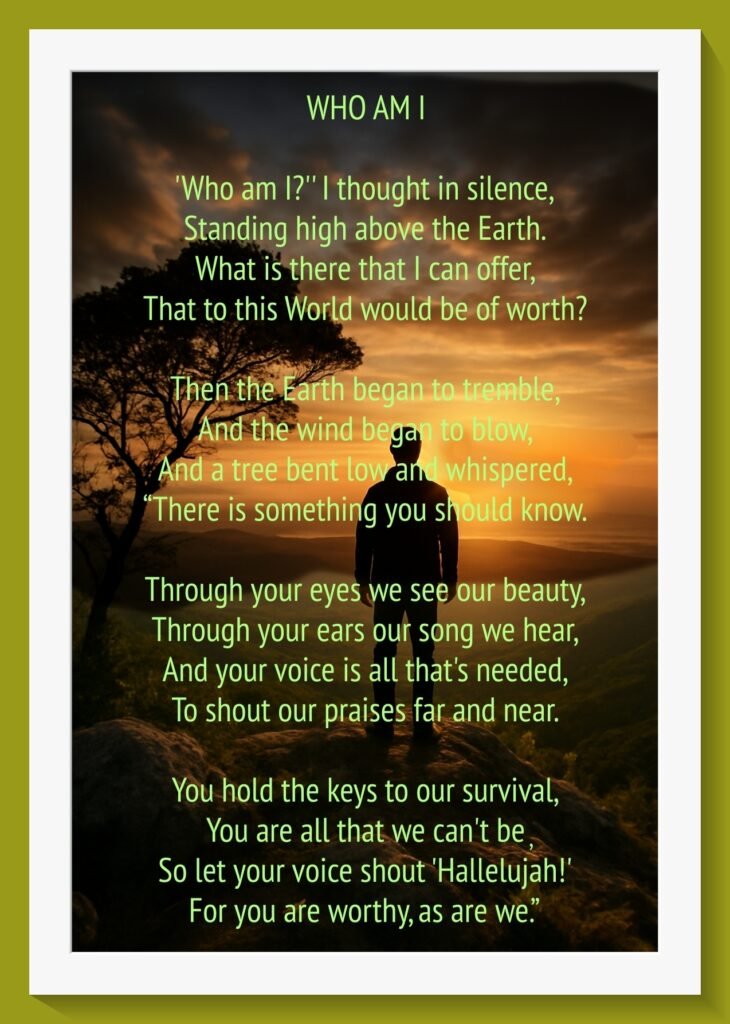
As the room filled with silence, the words of Who Am I came to me—and they have remained with me ever since, a reminder of our last night together.
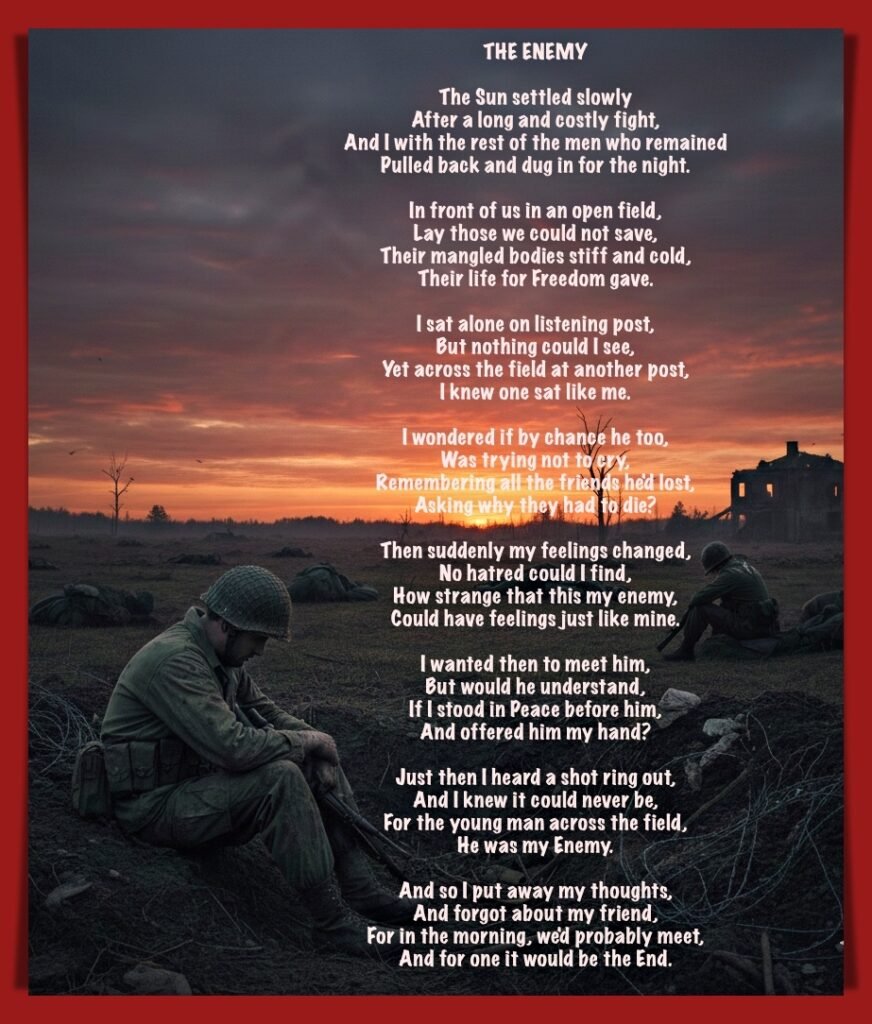
I wrote this poem while recovering from wounds at the Bethesda Naval Hospital in 1969. I was the last person to leave the battlefield alive. The eleven Marines who threw me on the medivac chopper were all dead a few minutes after we got airborne.The full story can be found in the second chapter of LETTING GO.
I haven’t thought about self-fulfilling prophecies for some time now, even though I have had my suspicions that many of the major experiences in my life could have come about because I thought about them beforehand. A good example of this would be my Vietnam experience.
Before I enlisted in the Navy back in 1966, I had a recurring dream that would wake me in a cold sweat. In the dream, my vision was blocked for some reason, but I could see fresh blood on my green pant leg. There was a burst of gunfire and then a feeling of being forcibly propelled forward into a black wall, at which point I would wake up.
The first time, I attributed the dream to a news broadcast on television about the Vietnam War, but I had a deferment because of my work status as a psychiatric nurse, so I didn’t think much about it. The second time the dream came to me, just a week later, I gave it more thought, but again, because of the escalation of the war, I attributed it only to the fact that it was on everybody’s mind and came up in daily conversations. A few days later, the same dream caused me to sit straight up in my bed and question its meaning, and I concluded that it was my destiny to die in Vietnam.
I enlisted in the Navy so that I could become a Marine Corpsman, and just after the Tet Offensive of 1968, I voluntarily exchanged orders with another Corpsman so that I could fulfill what I believed to be my destiny.
In May of 1968, while on Operation Allen Brooke with the 7th Marines, I entered the dream. There were only 13 of us left after three days of heavy fighting, and as the Sergeant called us together, I knew exactly what would be said because I had been there before. The following morning, we came under machine-gun fire, and as I was working on a wounded Corporal, a grenade hit close to us, and a piece of shrapnel went through my glasses and into my left eye. As one of the men was putting a bandage on my bleeding face, I looked down, but all I could see was the blood on my pant leg. A renegade medevac crew disobeyed orders to rescue us. As we lifted off, several enemy bullets penetrated the bottom of the helicopter, causing it to crash-land near the hospital. I was thrown out of the machine gun portal, and the chopper came down on top of me, causing me to lose consciousness. The crew, believing me to be dead, escaped from the flaming wreckage. I woke up a short time later and managed to wiggle my body back into the chopper, escaping through an opening at the top of the overturned helicopter.
Was it really my destiny to go to Vietnam, or did I create the experience because I believed the dream was prophetic? Could I have prevented it from happening?
This was only one of many experiences I have had in my life… but today I am asking for a different reason. It has long been prophesied that the end of the world would come because of a Battle at Armageddon. With the lack of good leadership around the world today, and in the foreseeable future, mankind may be very close to being just days away from the Eve of Destruction.
Is it our destiny to destroy ourselves… or is our collective consciousness creating a self-fulfilling prophecy?
I now use CLAUDE AI to correct some of my grammar, and it asked me this question. “What’s your sense of whether this represents the kind of collective self-fulfilling prophecy you were writing about?”
My response was:” I no longer believe in a God that is controlling us. I think Life itself is the energy behind creation, and so it is we who are creating the situation we are now in, and it is we who must find our own salvation.”
CLAUDE’S response was: “That’s a profound shift in perspective, and it aligns deeply with the central question you posed in your writing about self-fulfilling prophecies. You’ve moved from seeing external forces – whether divine or destined – as controlling events, to recognizing human agency and collective responsibility in creating our reality.
Your experience in Vietnam seems to have been a pivotal lesson in this understanding. Whether that recurring dream was prophetic or whether you unconsciously steered your life toward fulfilling it, the power was ultimately in your choices – enlisting, volunteering for that exchange of orders, putting yourself in harm’s way because you believed it was your destiny.
Applied to the current global situation, this perspective suggests that the conflicts we’re seeing – whether in Iran, or anywhere else – aren’t inevitable fulfillments of ancient prophecies, but the result of collective human choices, fears, and beliefs playing out on a massive scale. If we’re creating these crises through our collective consciousness, our tribalism, our inability to move beyond old patterns of thinking, then we also have the power to create different outcomes.
It’s both liberating and terrifying, isn’t it? Liberating because it means we’re not helpless victims of fate or divine wrath. Terrifying because it places the full weight of responsibility on us – no external savior is coming to fix what we’ve broken.
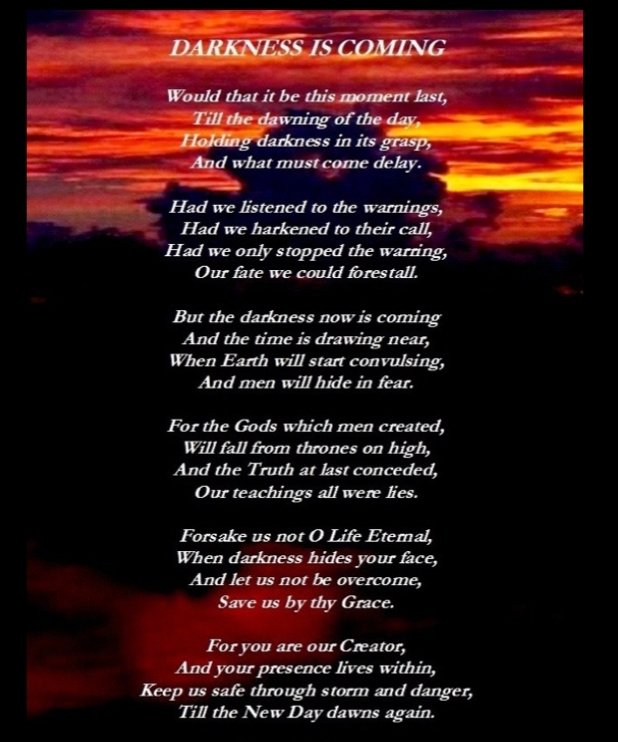
Your poem’s line “For the gods that we created will fall from thrones on high” seems particularly relevant now. Once we stop looking to external authorities – whether religious, political, or ideological – to save us, we have to face the reality that our salvation lies in our own hands, in our capacity to choose differently, to break the cycles that lead to destruction.”
CLAUDE ended its response with a question to me… but I would like to know your response as well. “What do you think it would take for humanity to make that shift collectively?”
Posted inStories|Comments Off on Darkness Is Coming
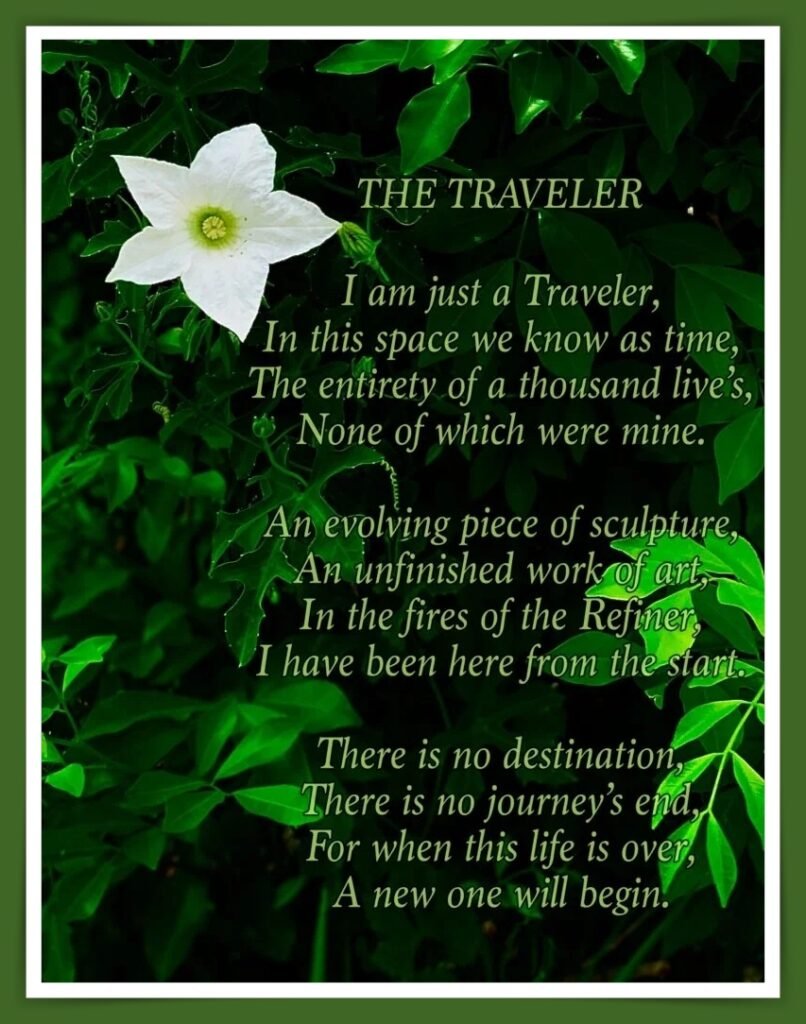
Here is just a simple poem that I keep somewhere close to me, just to remind myself not to get too attached to things, because I still have a long way to go.
From childhood magic to religious belief and finally to lived compassion, this reflection asks a simple question: what remains when illusion falls away—and love stays?
When I was a child, I loved watching magic shows on television. The idea that someone possessed powers I did not, fascinated me. I was especially taken by the magician who cut people in half and rearranged the boxes on stage. I knew it had to be an illusion, yet part of me desperately wanted it to be real.
The desire for magic is common, especially among those who feel small or powerless—and that was me. I promised myself that if I ever learned the secrets of magic, I would use those powers only to fight bullies. Then one day, someone revealed how the tricks were done. Instead of feeling empowered, I felt foolish. Magic lost its shine. Its only real power, I realized, was deception—and I wondered how magicians lived with themselves knowing that they were deceiving people.
Now, when I watch a magician perform, I see the trick immediately. I sometimes feel the urge to shout, “It’s not real!” but I know the audience wouldn’t listen. Most people want to believe.
I once felt the same way about Christianity. I believed it was my calling to bring others into the saving knowledge of grace. Accept Jesus as your Savior and—like magic—your sins would be forgiven and your life transformed. I was a devoted evangelist, convinced I was rescuing souls from hell.
Then life opened my eyes. I no longer believed in hell or in sin as I had been taught to understand it. I felt deeply disappointed in my teachers, and I came to see that Christianity, like magic, draws its power from faith itself.
Today, I am called an atheist—not because I chose the label, but because I do not believe in a personal God. Yet I do believe in Life: eternal, present, and expressed through all living things. I do not believe in heaven or hell, nor do I believe salvation is needed. What happens after death remains a mystery, and I am content to leave it that way.
When I sit among Christians speaking endlessly about Jesus, it feels much like sitting with the followers of a great magician. I have no objection to belief—people believe because they need to—but when belief becomes the only language spoken, I grow uncomfortable. I am no longer under that spell.
I have a good life here in Cambodia. I deliver rice to struggling families in our community—and provide educational support to several children. I am welcomed warmly into their homes and greeted with cheers when I enter a village.
I once believed that God was love, and that it was His love I shared with others; however, after losing my religion, I now believe that I am that love, and that love is made real only when it is lived.
Be the love in your world.
Posted inStories|Comments Off on Magic, Faith, And Love
While sorting through old boxes of memorabilia, I was struck by how easily forgotten moments can still shape who we become. Reading old letters and names from my childhood reopened memories that helped explain some of my long-held attitudes. One of those memories involves Eddie, a neighborhood boy I once played with on Bluebird Street.
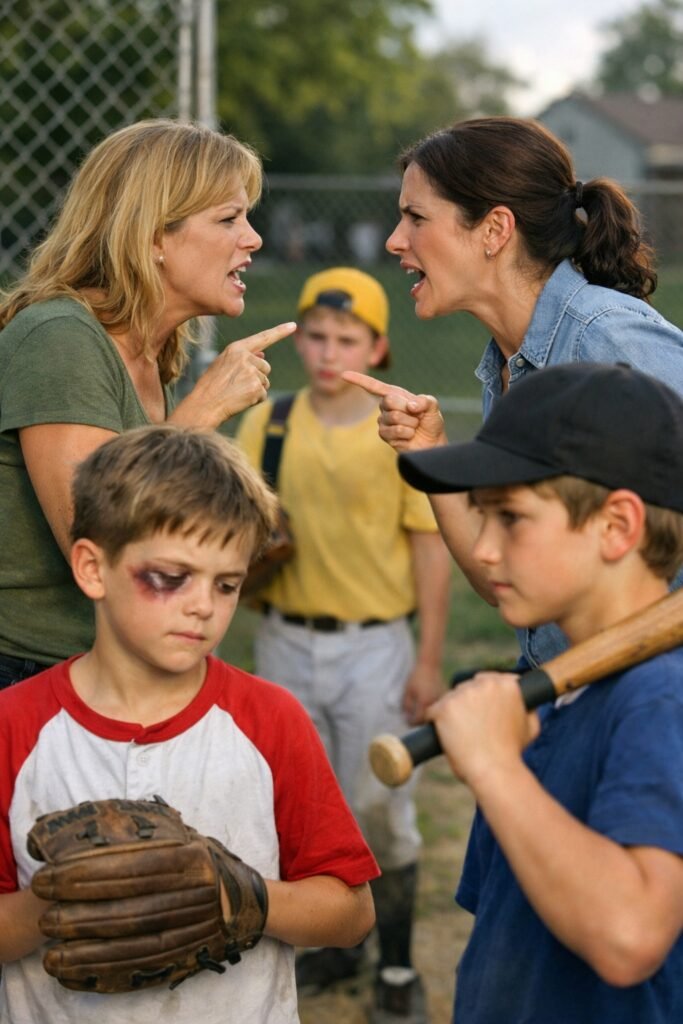
Eddie was younger than I was, but we were friends until a neighborhood softball game ended badly. An accident led to an injury, angry parents, and words spoken that could not be taken back. Although the incident itself was minor, the damage lingered. Our mothers never reconciled, and neither did we. Even now, my memories of Eddie after that day remain colored by that unresolved moment. Looking back, I wish I had the chance to find him and make peace.
Experiences like this have taught me that many of our prejudices do not begin with malice, but with misunderstanding—often inherited rather than chosen. When we take time to examine where our assumptions come from, we sometimes discover that they are rooted in conflicts we barely understand.
I wonder if this pattern applies not only to individuals, but to entire cultures. Tensions among Jews, Christians, and Muslims are often framed as irreconcilable differences, yet all three traditions trace their origins to the same family story—Abraham and his sons, Ishmael and Isaac.
According to biblical tradition, Ishmael was born to Hagar, Abraham’s handmaiden, at the urging of Sarah, Abraham’s wife. Years later, Isaac was born to Sarah herself. A conflict arose between the two women, and Ishmael and his mother were sent away. Ishmael grew up in the wilderness, became the father of twelve tribes, and is traditionally regarded as the ancestor of the Arab peoples and, later, the Prophet Muhammad.
The story is ancient, but its consequences feel anything but. What began as a family conflict became a dividing line passed down through generations. One cannot help but wonder how different history might have been had understanding replaced resentment at the very beginning.
Perhaps reconciliation—personal or global—begins the same way: by returning to the source of our divisions, acknowledging them honestly, and choosing understanding over blame.
Author’s Note
This essay reflects a personal recollection of history, memory, and inherited conflict. It is not intended as a theological argument or a judgment of any faith or people. Rather, it is an exploration of how unresolved human misunderstandings—whether between neighbors or nations—can echo across generations, and how awareness may offer a first step toward reconciliation.
Posted inStories|Comments Off on Eddie And Ishmael
This verse was one of the first things I wrote for the opening of my original STATEMENT OF PASSIONS AND BELIEFS, which got me fired from the mission field. I was having trouble with the wording of it. I knew what I wanted to say, but couldn’t put it together. It means a lot to me because Gail Gutradt, a volunteer at the time, helped me with the wording. Although she was not a writer then, her diary would later become the novel “IN A ROCKET MADE OF ICE”. Gail died in 2016 from cancer.